NURSERY MANAGEMENT IN TOBACCO
Every cigarette type tobacco growing region faces unique challenges while raising good quality transplants. It is a well-established fact that the choice of variety and healthy transplants are the foundation to deliver economic returns.
Tobacco seeds are very small and one gram contains ~10,000 seeds. The emerging seedlings are tiny and delicate and therefore, the seeds are not sown directly in the field. Hence, they are sown in nurseries or seed beds and tended carefully till the seedlings attain a particular size before transplanting in the main field. For successful raising of nurseries proper location, good preparation and manuring, adequate facilities for watering and timely controlling of pests and diseases are essential.
SOILS
Generally, tobacco nurseries are grown on sandy or sandy loam soil. The light soils with good drainage and without any water stagnation are the best soils for raising tobacco nursery.
There are two types of nurseries 1. Conventional Nursery & 2. Green Tech.
CONVENTIONAL NURSERY
The nursery site should have a good internal as well as surface drainage and should be situated at an elevated place. It is desirable to change the nursery site every year as it would minimise incidence of pests and diseases and also eliminate contamination by other varieties.
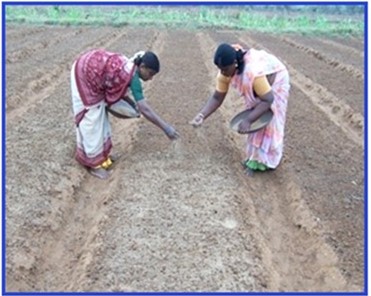
systematic layout of nursery on raised beds with intervening channels helps in quick drainage of rain water. The beds are 1.0 m to 1.22 m wide to facilitate hand-weeding and watering with rose cans. The beds can be of any convenient length along the slope but generally not more than 10 m and with a height of 15 cm. The channel width between the bed should be 30 cm. The optimum seed rate is 3-5 kg/ha (0.4 g/m2 or 4 g/ 10 m2) in general. Application of well sieved Farm Yard Manure (FYM) @1kgm2 and incorporated in top 5cm of the soil. Slight raking of the soil before sowing. The seeds are mixed with sufficient sand and broadcasted on the bed.
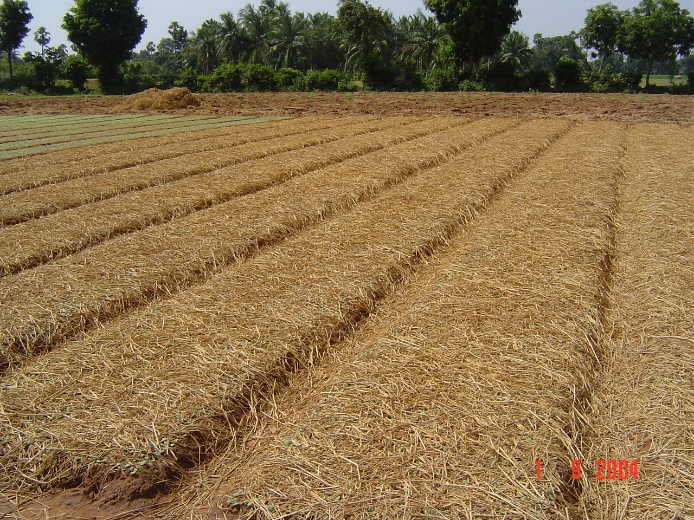
The sowing time of FC tobacco of Karnataka is in the month of March and is 1st to 2nd fortnight of August in Andhra Pradesh. The first ten days of nursery period is most critical for the germination, missing even one watering can cause severe damage to the germination of seed. A minimum of 4-5 irrigations are required per day in the initial stages and it may extend if the temperatures are too high. Irrigation through micro sprinklers will reduce the dependency on labour and efficient. The provision of mulches (Paddy straw) over seed beds have been found very beneficial as they conserve moisture during germination and later protect the tender seedlings from strong sunlight and beating rains. After mulching spray Imidacloprid (Confidor) @ 2.5 ml/ 10L of water.
Mulches are gradually thinned or removed as the seed germinates and slowly the seedlings emanated from the seed. It is recommended to transplant the seedlings from one to another bed i.e., resetting, when they are 3 to 4 weeks old in order to ensure sturdy growth of seedlings by the time of planting. A week to ten days before planting, the seedlings are hardened by withholding water. Such seedlings withstand the shock of transplanting better than normal seedlings. Clipping (cutting of ~ 50% of lamina of top two leaves) is important activity which stimulates root activity and hardening of stem. Two clippings are recommended for every nursery. Clipping immediately followed by Blitox spray (Copper Oxy Chloride) @ 2g/ L of water.
Seedlings of pencil thickness and of 10 to 15 cm length normally are preferred. Normally, the seedlings are ready for planting at the end of 7th week and in the first pulling 60 to 70% of the total seedlings will be available. The seed bed is top-dressed after each pulling to make the remaining seedlings also grow to transplantable size. When planting is delayed due to unfavourable field conditions, the overgrown seedlings in beds are clipped without damaging the growing point in order to retard the growth.
NUTRIENT MANAGEMENT - CONVENTIONAL
| Time period | Fertilizers ( per 10 sq.m) | Fertilizers (per acre) |
|---|---|---|
| At the time of Sowing | 175 g DAP or 300 g SSP | 42 kg DAP or 72 kg SSP |
| 160 g SOP | 40 kg SOP | |
| 40 g AS | 10 kg AS | |
| 50 g Mg SO4 | 12 kg Mg SO4 | |
| 10 DAS | 50 g Mg SO4 & 25 g AS | 12 kg Mg SO4 & 6 kg AS |
| 15 DAS | 50g Mg SO4 & 25 g AS | 12 kg Mg SO4 & 6 kg AS |
| 20 DAS | 40g AS | 10 kg AS |
| 25 DAS | 40g AS & 20 g SOP | 10 kg AS & 6 kg SOP |
| 30 DAS | 50g AS & 20 g SOP | 12 kg AS & 6 kg SOP |
| 35 DAS | 60g AS & 20 g SOP | 15 kg AS & 6 kg SOP |
| 40 DAS | 70g AS & 20 g SOP | 17 kg AS & 6 kg SOP |
| 45 DAS | 80g AS & 20 g SOP | 20 kg AS & 6 kg SOP |
| 50 DAS | 80g AS & 20 g SOP | 20 kg AS & 6 kg SOP |
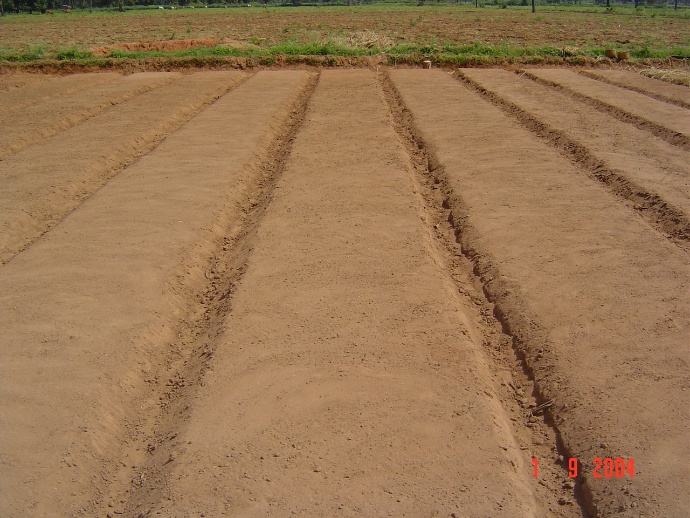
Seed Beds
Sowing of Seed after mixing with sand
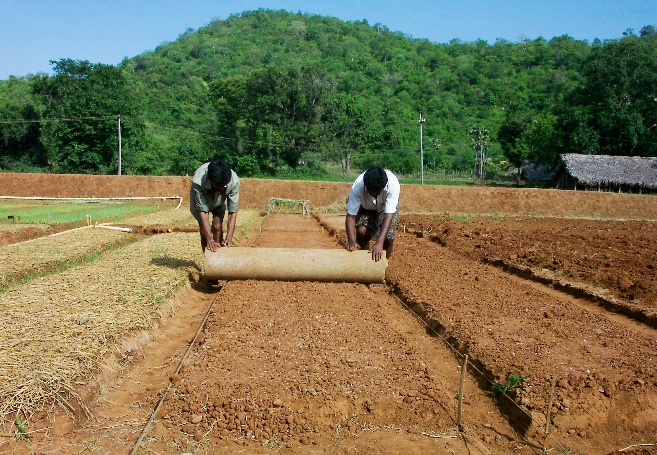
Rolling of Cement pipe after sowing for intact contact of seed with soil
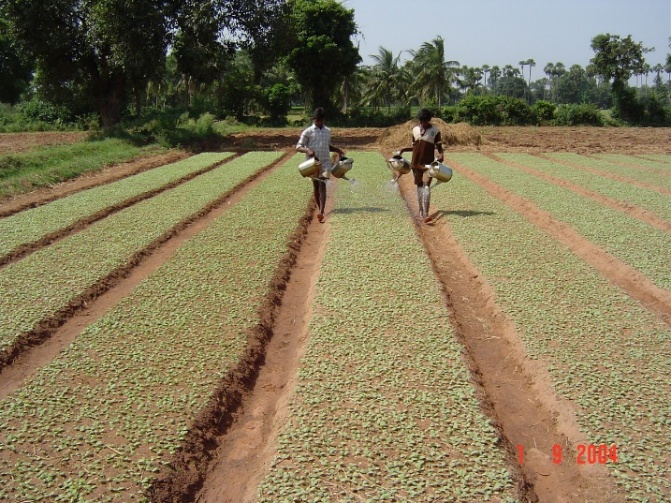
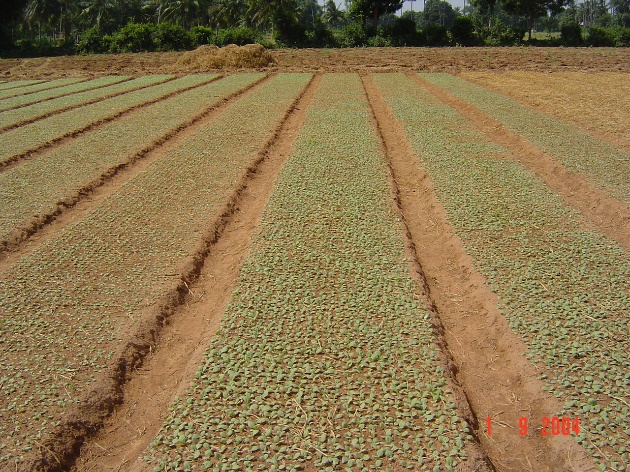
Seed beds irrigating with Rose cans
Bed with Resetted Seedlings
Bed covered with Paddy Straw mulching
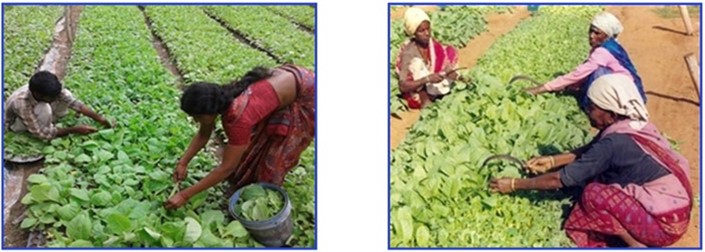
Clipping of Seedlings
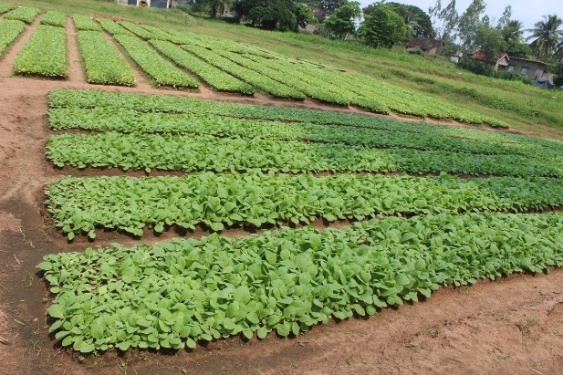
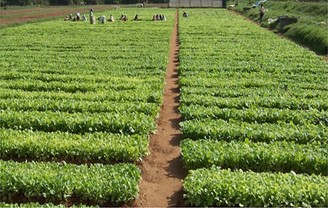
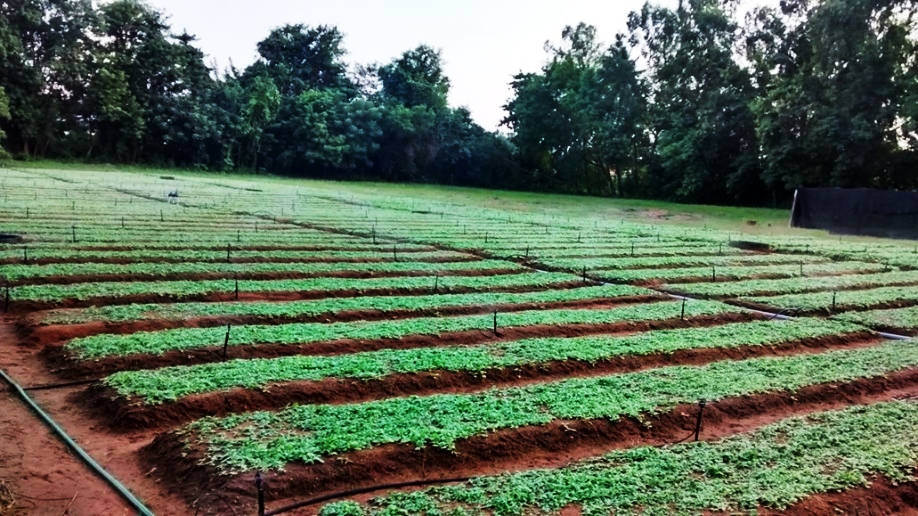
Different stage of Nursery
Nursery – Micro Sprinkler Irrigation
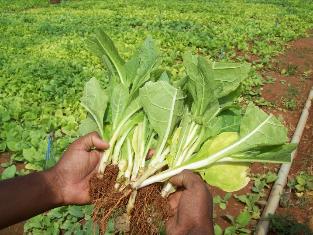
Pencil thickness Seedlings ready for plantation
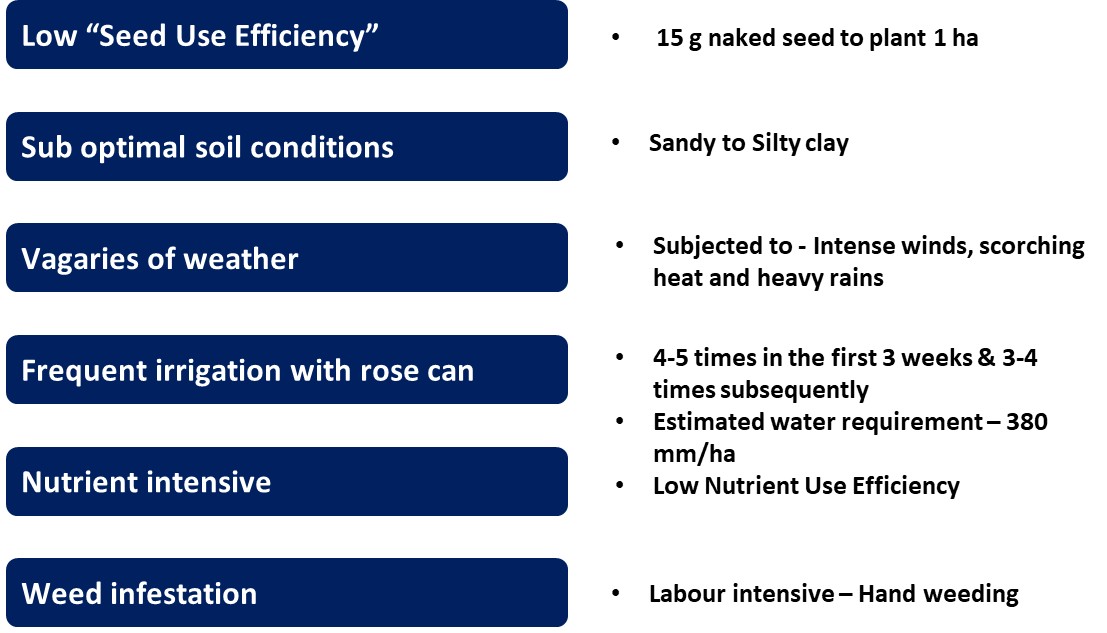
Conventional method - Challenges
“GreenTech” – A novel technology for transplant production
Achieving favourable farmer economics solely depends upon the grower’s ability to enhance productivity and it has been proved beyond doubt that Hybrid’s deployment plays a protagonist role. Hybrids have the ability to perform better than the existing varieties and can withstand adverse weather conditions, like water logging or prolonged drought. Hybrid seed production poses major operational challenges and is relatively inelastic to the demand with the current levels of resourcing and infrastructure. “Good Seed doesn’t cost, it pays” – this old adage is particularly true with the use of Hybrid seeds and prudent methods are required to be devised to enhance the “Seed Use Efficiency”.
The conventional seedling production technology requires ~20g of seed to produce seedlings for planting 1 ha of main field. If 20g of seed contains about 2,00,000 seeds, only 10 – 12.5% of seed is effectively utilized for producing healthy transplants.
The “GreenTech” methodology aims at enhancing the “Seed Use Efficiency”, multifold to > 70%. The technology makes use of a low-cost polyhouse designed to offer protection against weather (rain and high temperature), Germination trays for producing seedlings which can be utilised for resetting into High Impact Polystyrene Trays and Cocopeat based growing medium. Traditional fertiliser mixtures are replaced with Water soluble and speciality fertilisers (WS & SF), for enhanced nutrient management and use of minimum Crop Protection Agents (CPA).
This novel technology offers twin advantages of enhancing seed use efficiency and production of healthy transplants with optimum use of natural resources. This technology also protects the young seedlings from the vagaries of weather and offers a fair deal of climate resilience.
Objective
-
Utilise raw seed to enhance the “Seed Use Efficiency” from 6-8% to over 50% and produce healthy transplants
-
Achieve climate resilience in Burley/ FC tobacco transplant production
-
Develop sustainable transplant production practices
Process
The following materials required for the “Green Tech Transplant Production”. The Polyhouses has a capacity to produce seedlings from 4 – 6 ha. Several formats are available to suit the individual farmer affordability and requirement. For FC & Vinukonda Burley, the following format of GreenTech structure may be considered.
-
Poly House (17’ x 12’)
-
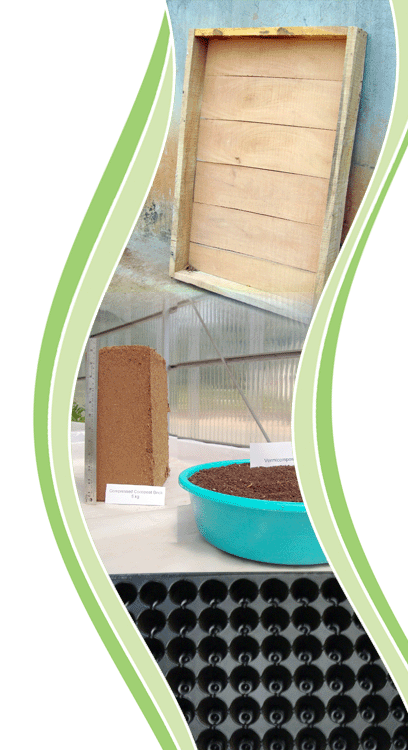
Germination Trays (2.5’ x 2.0’ x 2”) – 0.46 sq.m / 5 sq.ft
-
Cocopeat based growing medium – Decomposed Cocopeat and FYM / Vermicompost in 3:1 ratio.
-
Polystyrene trays – 98 cavities – 20 cc
-
Shade net / Geotextile / Polythene covers
-
Water Soluble Fertilisers (19:19:19, 13:0:45) and Mixture of micronutrients containing Zinc and Boron
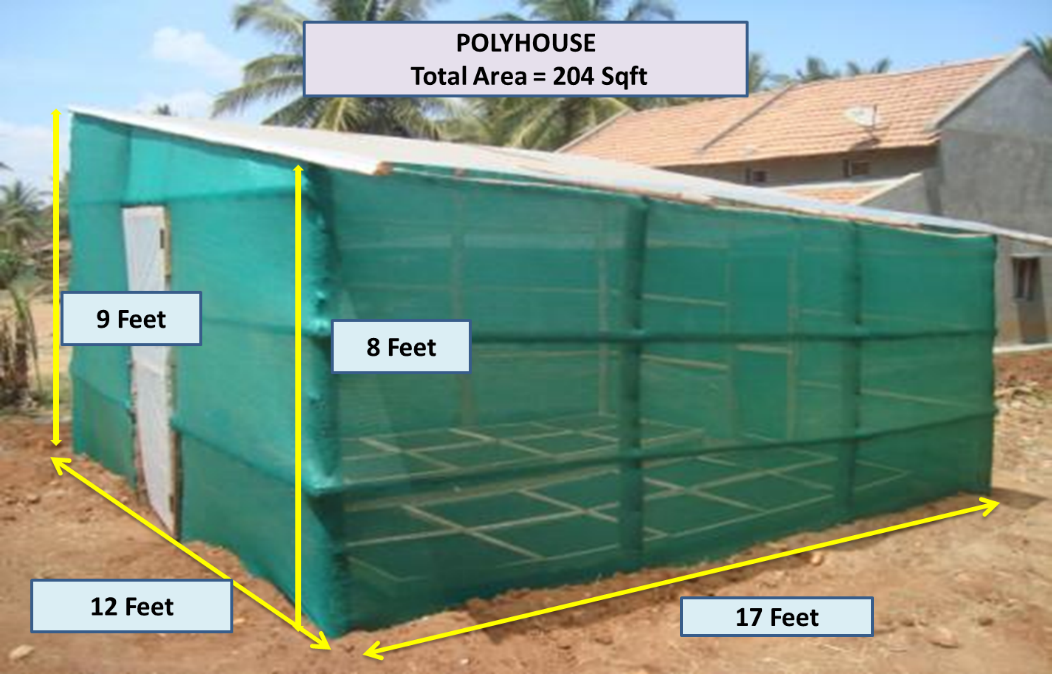
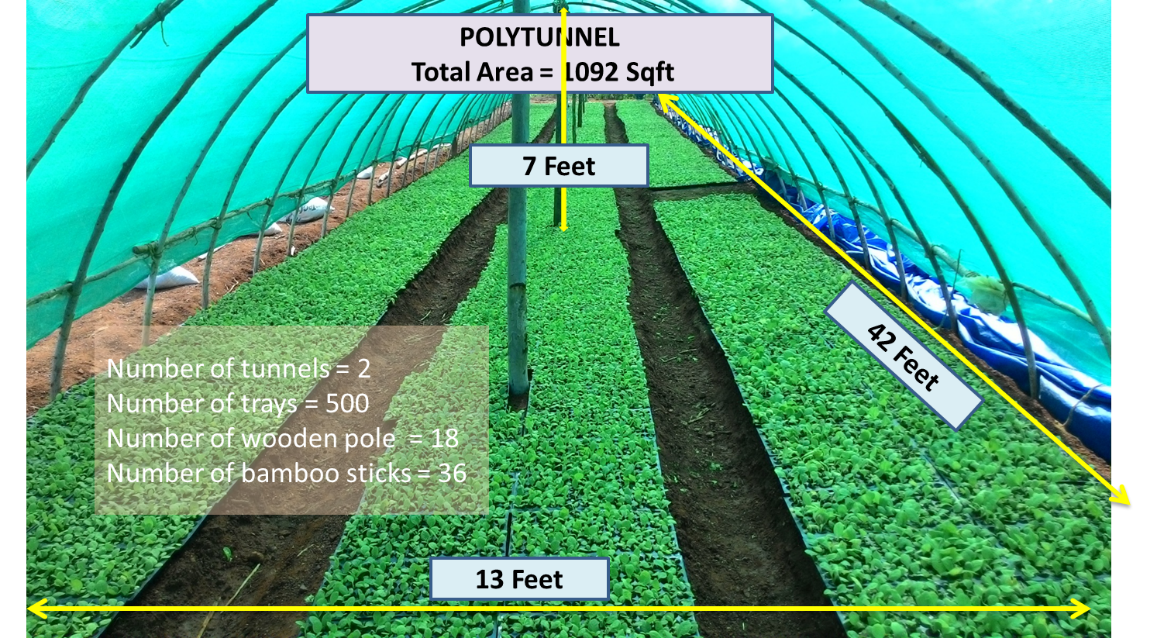
The above dimensions of GreenTech structure can produce 96000 seedlings, with 32 germination trays @ 3000 seedlings / germination tray.
Temperature during the seedling production phase in Burley and Flue cured tobacco regions will hover around 40O C and will impact the germination and growth of seedlings. It is mandatory to bring down the temperature during the seedling production phase by adequately providing a 50% shade net on the diffuser plastic sheet (UV Stabilised polyliner), both on the GreenTech structure as well as on the polytunnel, as illustrated below.
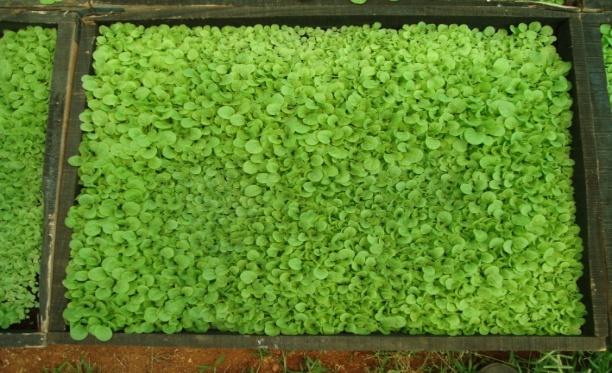
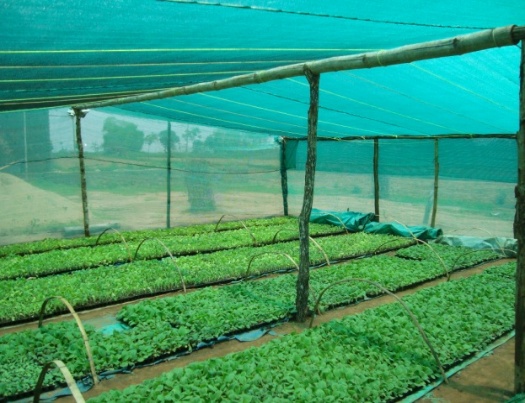
Growing Procedure
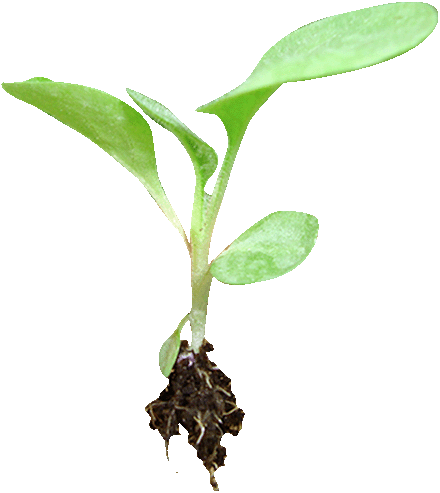
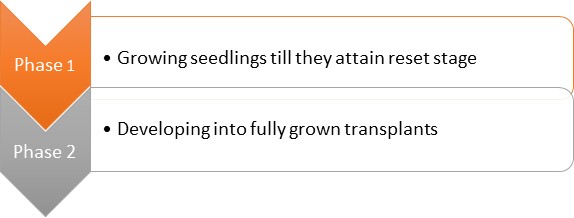
Involve two distinct phases of growth.
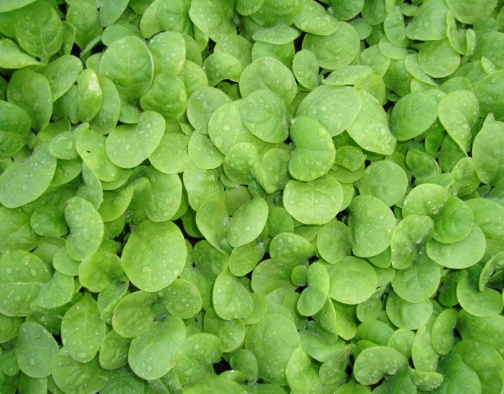
 Seeding
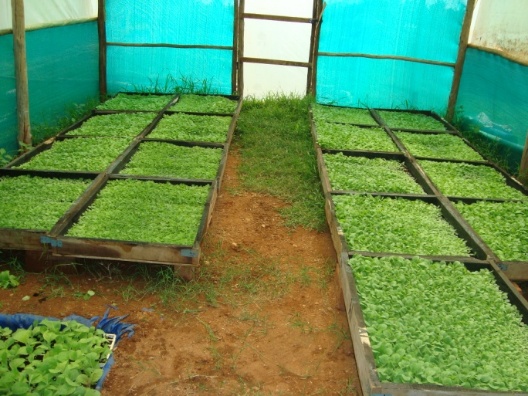
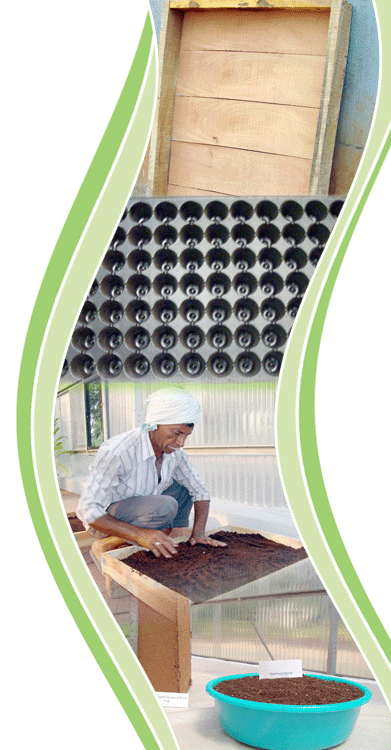
The process starts with filling the seedling production trays with growing medium (75% Cocopeat + 25% well decomposed FYM/ Vermicompost by volume) to reach of height of 1.5” in the tray. Alternatively 0.35 g of naked seed can be used as seed rate. After seeding, the surface should be gently compacted using a thin wooden plank. The trays are then transferred into the polyhouse. The structure is designed to facilitate adequate ventilation, light and favourable temperature.
Watering
During normal conditions, it requires watering to be done for 3-4 times. It can be even more if the temperature is higher. Each watering would be approximately 0.4- 0.5 litres per germination tray. Water only when needed, to maintain the media in a moist condition. Higher moisture will lead to the formation of algae and mortality of seedlings due to damping off. Each tray approximately requires 2 to 2.5 litres water per day. Watering should be carried out only with a sprayer having a hallow cone nozzle to ensure proper distribution of moisture. Germination will be noticed on the 7th day. Ensure good quality of water for the germination trays to prevent the formation of crusts on the surface. Hard water should be avoided. Good quality and potable water should be used for growing the seedlings in the germination trays. Higher EC will adversely impact germination and retard the growth of seedlings.
Nutrient Supply – Continuous Feeding
Water soluble fertilizers like 19:19:19 should only be used. 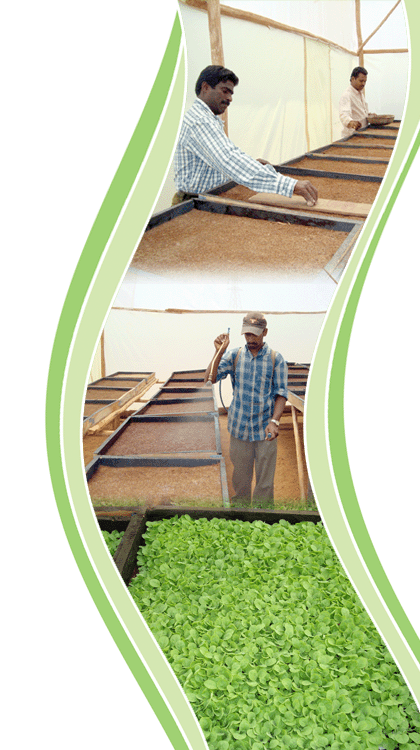 The nutrients are to be supplied to the young seedlings frequently in low doses rather than application in high doses with less frequent intervals. The practice enhances the nutrient use efficiency by utilizing lower quantity of nutrients than in the traditional system.
NUTRIENT MANAGEMENT
| Stage | Activity | Nutrient Application | |
|---|---|---|---|
| 19:19:19 | Immediately after Germination (7th or 8th day) | 1gm/1 litre water | |
| 19:19:19 | 9th or 10th day | 2gm/1 litre water | |
| 19:19:19 | 11th or 12th day | 2gm/1 litre water | |
| 19:19:19 + Micronutrient | 13th or 14th day | 3gm/1 litre water + 1gm/Litre (MAX) | |
| 19:19:19 | 13th or 14th day | 3gm/1 litre water | |
| MgSo4 | 14th or 15th day | 2gm/1 litre water | |
| 19:19:19 | 15th or 16th day | 3gm/1 litre water | |
| 19:19:19 + Micronutrient | 17th or 18th day | 3gm/1 litre water + 1gm/Litre (MAX) | |
| 19:19:19 | 18th to 25th day (Alternate day) | 5gm/1 litre water (3 times) | |
| Ridomil | 20th day | 2gm/1 litre water (Need based) | |
| Blitox | After pulling | 2gm/1 litre water ( every after pulling) | |
| After Resetting | |||
| 13:00:45 | Resetting after 2 days (Alternate day - 6 times) | 5gm/1 litre water | |
| AS | Resetting after 12 or 13th day | 50gm/10 litre water (10 sq.m) | |
| AS | Resetting after 17 or 18th day | 100gm/10 litre water (10 sq.m) | |
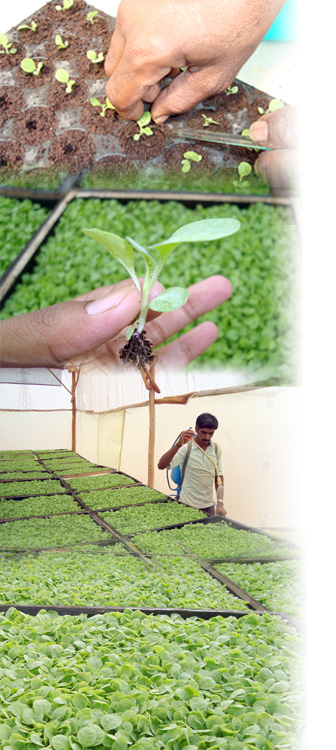 To supplement the micro nutrients, a mixture containing Zinc and Boron has to be sprayed at a concentration of 0.2 – 0.3 % once 10 days after sowing, 14th and 17 days after sowing. State Grade 4 Formulations (the formulation contains Zn 6%, Fe 4%, Mn 3%, Mo 0.05%, B 2% and Cu 1.00%), from reputed companies may be utilized for supplying micronutrients to provide wholesome nutrition to the young seedlings.
Resetting on the Polystyrene trays
The seedlings will be ready for resetting within 20 DAS. It may be delayed by an other 5 days in high temperature conditions. Seedlings should be considered ready for resetting, once the leaf attains 1.5 cm diameter. Any delay in resetting will trigger the incidence of damping off and seedling blight. 30% of the seedlings will be ready for resetting between 20-25 DAS. All the seedlings from the germination tray can be reset within a week (28 - 32 DAS) from the first resetting date. Each time after transferring the grown up seedlings from the germination tray, Copper oxy chloride (Blitox) @ 0.2% has to sprayed on the germination trays to prevent the spread of diseases.
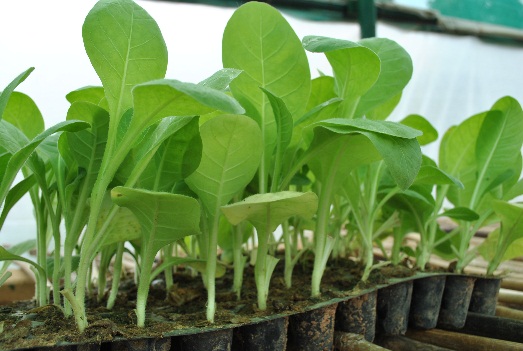 After resetting the polystyrene trays should be placed in a shaded location to help the seedlings to recover from the transplanting shock. The seedlings will recover from shock and starts growing. After 4 days, the trays can be shifted to the seedling tunnels, for growing seedlings. The process of growing transplants from here onwards is similar to that of the existing practice.
Hardening
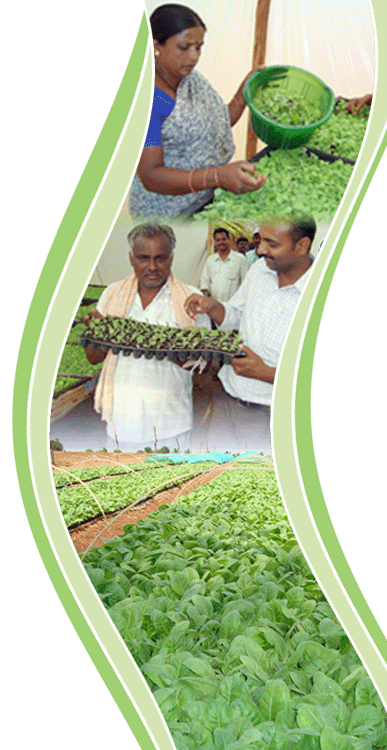
Clipping has to be done when the seedlings are dry, preferably in the afternoon. Clip not more than 50% of the lamina. Apply Copper oxy chloride as a foliar spray @ 0.2% concentration immediately after clipping.
Clipping has to be done at least 3 times.
Precautions
The successful implementation of technology depends on ensuring the following activities.
-
Ensure ventilation of the structure by opening the door, especially during the afternoon hours. Though ventilation is provided in the structure on all the sides, additional ventilation will be necessary during certain peak hours of higher temperature. The ventilation will require an additional dose of watering.
-
Ensure the provision of 50% shade net on top of the GreenTech structure and the poly tunnels to reduce the temperature inside.
-
Depth of sowing should not be lower than 2 mm. Sowing deep will severely hamper the emergence of seedling
-
Ensure the supply of potable quality of water throughout the Germination Tray stage. Ensuring good quality of water within the first one week is extremely critical, since dryness in the growing medium results in mortality of young seedlings. High EC retards the growth of seedlings.
-
Use only sprayers with hallow cone nozzle. Ensure that the nozzle delivers uniform spread. The sprayers should be exclusively used for watering and should not be put to other uses like spraying of CPAs and Herbicides. Traces of these materials will retard the growth and can even lead to mortality of the tender seedlings.
-
Only water soluble fertilizers are recommended on the Germination Trays at right concentration. Higher concentration will lead to phyto toxicity.
-
Before sowing into the germination trays and before transplanting into the HIPS trays, check the suitability of the medium by test sowing the seeds in a germination tray, a week ahead of the proposed date of sowing of the main Germination trays and subsequently transferring the grown-up seedlings into HIPS trays. This exercise will ensure the use of appropriate quality of the medium. The growing medium should have lower EC ie., 1000-1200 micro seimens/cm.
-
Ensure to keep the HIPS trays in shade for three days before transferring them on to the growing bed.
Impact
The major advantages include the following.
-
Enhanced “Seed Use Efficiency” from 10-12.5% to 70%
-
Effective resource management - Nutrient & Water use efficiency
-
Saving on labour cost on account of Irrigation and weed control
The multifold increase in the seed use efficiency is a major step towards developing sustainable practices in seedling production technology. Since climate change is going to have a profound influence on rainfed farming in the future and a move towards protective agriculture is a giant leap.
Prophylactic sprays with Imidacloprid or Thiomethaxam @ 3 ml / 10 litres should be given twice to protect against sucking pests on the open beds in addition to a spray of Flubendiamide @ 3 ml / 10litres of water.
Knowledge links
[Agro Knowledge Home](./Agro Knowledge Home.md)
- [Audio Script for Damping off Disease](./Audio Script for Damping off Disease.md)